



-
Wattmaster - Tester Mag Stick Solenoid VLV | WATMT702Wattmaster Tester Magnetic Stick Solenoid Valve | WATMT702 The Wattmaster Magnetic Stick Tester is designed for testing solenoid valves and electrical components safely and efficiently. Its simple and practical design allows quick verification without direct contact. ► Key Features Magnetic stick tester design Suitable...
- $106.56
- $106.56
- Unit price
- per
-
Wattmaster - Volt Stick 20-1000V Light/Sound FT Torch | WATVS-BRWattmaster Volt Stick 20–1000V Light/Sound with Torch | WATVS-BR The Wattmaster Volt Stick offers non-contact voltage detection from 20V to 1000V, with built-in light, sound alerts, and torch functionality. Designed for versatility and safety, it’s ideal for low and high voltage testing in various...
- $74.93
- $74.93
- Unit price
- per
-
Wattmaster - Tester V Stick 230-1000V Light & Sound | WATVSWattmaster Voltage Stick 230–1000V Light & Sound | WATVS The Wattmaster Voltage Stick is designed for quick non-contact voltage detection from 230V to 1000V. With light and sound indicators, it provides fast and safe checks in electrical applications. ► Key Features Non-contact voltage detection...
- $79.38
- $79.38
- Unit price
- per
-
Wattmaster - Socket Outlet Tester With RCD Trip Test | WATOUTTESTWattmaster Socket Outlet Tester with RCD Trip Test | WATOUTTEST The Wattmaster Socket Outlet Tester is designed to verify wiring and perform RCD trip testing for safety compliance. Simple to use and highly effective, it ensures electrical installations are safe and correctly wired. ►...
- $76.96
- $76.96
- Unit price
- per
-
Wattmaster - Test Lead Set To Suit Elma Instruments | WATEL-TLSWattmaster Test Lead Set to Suit Elma Instruments | WATEL-TLS The Wattmaster Test Lead Set is designed to suit Elma instruments, providing reliable connections for accurate testing. Built for durability and consistent performance, it ensures safe and efficient electrical measurements. ► Key Features Designed...
- $65.20
- $65.20
- Unit price
- per
-
Wattmaster - 1000V True RMS Auto Check W/PC Con Cati | WATEL-BM829Wattmaster 1000V True RMS Auto Check with PC Connection CAT I | WATEL-BM829 The Wattmaster 1000V True RMS Multimeter is designed for high-voltage testing with advanced Auto Check functionality and PC connectivity. Built for accuracy and reliability, it delivers precise readings in demanding electrical...
- $381.32
- $381.32
- Unit price
- per
-
Wattmaster - RMS W/Auto Check + PC Con & Temp Catiii | WATEL-BM257Wattmaster RMS with Auto Check + PC Connection & Temp CAT III | WATEL-BM257 The Wattmaster RMS Multimeter with Auto Check provides accurate electrical measurements with added PC connectivity and temperature functionality. Designed for professional diagnostics, it offers reliable performance and advanced features for...
- $251.36
- $251.36
- Unit price
- per
-
Wattmaster - 600A AC/DC True RMS Clamp Meter + Temp | WATEL-9015Wattmaster 600A AC/DC True RMS Clamp Meter + Temp | WATEL-9015 The Wattmaster 600A True RMS Clamp Meter is designed for accurate AC/DC current measurement, with added temperature functionality for versatile diagnostics. Built for professional use, it delivers reliable readings in demanding electrical environments....
- $345.90
- $345.90
- Unit price
- per
-
Wattmaster - BNC Testing Cables | WATCBLTT-BNCWattmaster BNC Testing Cables | WATCBLTT-BNC The Wattmaster BNC Testing Cables are designed for reliable signal transmission and accurate testing in electrical and electronic applications. Built for durability and consistent performance, they provide secure connections for precise measurement and diagnostics. ► Key Features BNC...
- $12.23
- $12.23
- Unit price
- per
-
Wattmaster - Tester Insulation Multipurpose & Tracer F-Set | WATCBLTTWattmaster Insulation Tester Multipurpose & Cable Tracer Set | WATCBLTT The Wattmaster Multipurpose Insulation Tester and Cable Tracer Set is designed for comprehensive electrical testing and fault finding. Combining insulation testing with cable tracing capabilities, it provides versatility for professional electricians. ► Key Features...
- $463.43
- $463.43
- Unit price
- per
-
Wattmaster - Shoulder Strap - 155cm (L) x 18mm (W) | WAT1652IN-SSWattmaster Shoulder Strap 155cm x 18mm | WAT1652IN-SS The Wattmaster Shoulder Strap is designed for comfortable carrying of testing equipment on-site. Durable and adjustable, it improves portability and ease of use. ► Key Features Length: 155cm Width: 18mm Durable construction Comfortable to wear Adjustable...
- $8.13
- $8.13
- Unit price
- per
-
Wattmaster - Spare Fuse - 0.5A/690V | WAT1652IN-FWattmaster Spare Fuse 0.5A / 690V | WAT1652IN-F The Wattmaster Spare Fuse is designed as a replacement component for insulation testing equipment. Built to specification, it ensures safe and reliable operation of your tester. ► Key Features 0.5A / 690V rating Replacement fuse for...
- $11.89
- $11.89
- Unit price
- per
-
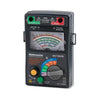
Wattmaster - Analogue Insulation Tester | WAT1652INWattmaster Analogue Insulation Tester | WAT1652IN The Wattmaster Analogue Insulation Tester is designed for reliable insulation resistance testing in electrical systems. Built for durability and accuracy, it is ideal for electricians performing routine testing and maintenance. ► Key Features Analogue insulation resistance testing Clear...
- $476.10
- $476.10
- Unit price
- per
Independent, Professional Tool Retailer on the Mornington Peninsula
03 5978 0078
One store. One team. 7,500+ businesses backed Australia-wide. Industrial Shed — built for the trade.
03 5978 0078

Limited Time Offers
Ingersoll Rand - Protective Tool Boot - 35MAX and 15QMAX | 35-BOOT
Protective Tool Boot - 35MAX and 15QMAX► Product OverviewThe Ingersoll Rand 35-BOOT is a tool boot built to the standard Ingersoll Rand has set for more than a century. Supplied to Industrial Shed through CAPS Australia, the authorised Australian distributor for Ingersoll Rand power...
- $97.28
$97.78- $97.28
- Unit price
- / per
Ingersoll Rand - Power Regulator Restricted Tool Boot | W5133-BOOTX
Power Regulator Restricted Tool Boot► Product OverviewThe Ingersoll Rand W5133-BOOTX is a tool boot built to the standard Ingersoll Rand has set for more than a century. Supplied to Industrial Shed through CAPS Australia, the authorised Australian distributor for Ingersoll Rand power tools. Supplier...
- $124.42
$124.92- $124.42
- Unit price
- / per
Ingersoll Rand - W7152 Tool Boot - No Power Regulator Access | W7152-BOOTX
W7152 Tool Boot - No Power Regulator Access► Product OverviewThe Ingersoll Rand W7152-BOOTX is a tool boot built to the standard Ingersoll Rand has set for more than a century. Supplied to Industrial Shed through CAPS Australia, the authorised Australian distributor for Ingersoll Rand...
- $184.30
$184.80- $184.30
- Unit price
- / per
Ingersoll Rand - W7152 Tool Boo t Boot | W7152-BOOT
W7152 Tool Boo t Boot► Product OverviewThe Ingersoll Rand W7152-BOOT is a tool boot built to the standard Ingersoll Rand has set for more than a century. Supplied to Industrial Shed through CAPS Australia, the authorised Australian distributor for Ingersoll Rand power tools. Supplier...
- $184.30
$184.80- $184.30
- Unit price
- / per
Ingersoll Rand - W7150 Boot | W7150-BOOT
W7150 Boot► Product OverviewThe Ingersoll Rand W7150-BOOT is a tool boot built to the standard Ingersoll Rand has set for more than a century. Supplied to Industrial Shed through CAPS Australia, the authorised Australian distributor for Ingersoll Rand power tools. Supplier specification: W7150 Boot►...
- $156.92
$157.42- $156.92
- Unit price
- / per
Ingersoll Rand - Protective Tool Boot | W5330-BOOT
Protective Tool Boot► Product OverviewThe Ingersoll Rand W5330-BOOT is a tool boot built to the standard Ingersoll Rand has set for more than a century. Supplied to Industrial Shed through CAPS Australia, the authorised Australian distributor for Ingersoll Rand power tools. Supplier specification: Boot►...
- $87.62
$88.12- $87.62
- Unit price
- / per
-
- Shop by Collection
- Abrasives, Blades & Polishing Tools
- Adhesives, Sealants & Tapes
- Bearings, Power Transmissions & Drive Components
- Building & Construction Supplies
- Consumables & Replacement Parts
- Hand Tools
- Marking & Measuring Equipment
- Fasteners, Fixings & Hardware Supplies
- Garden, Outdoor & Landscaping Equipment
- Industrial Cleaning Equipment
- Ladders, Hoists & Material Handling
- Portable & Industrial Generators
- Power Tools & Accessories
- Site Essentials & Jobsite Gear
- Tool Storage, Maintenance & Organisation
- Welding Equipment & Supplies
- Workplace Safety & PPE
- Workshop Machinery & Equipment
-
- Shop by Brand
- Kincrome
- Milwaukee
- Fuchs
- OX Tools
- Iccons
- Alemlube
- All State Trailer Spares
- Bahco
- Bare - Co
- Bescon
- Bessey
- Bordo
- Bremick
- CRC
- Dy-Mark
- Excision
- Fanmaster
- Gorilla
- Grange
- Hobson
- Ironclad
- ITM
- JB's Wear
- Katana
- Klingspor
- Knipex
- Loctite
- Mack
- Macnaught
- Makita
- Maxisafe
- McMillan
- Megafire
- Optibelt
- Pacific Gas
- Pferd
- Prime Exposure
- Richmond Rolling Solutions
- Schutts Industrial
- Sheffield Group
- Sika
- Starrett
- Sutton Tools
- Timken
- Toledo
- Trax
- Tridon
- Unit
- WD-40
- Weldclass
- WeldTronic
-
- Trade Deals & Offers
- Clearance Items
- Seasonal Promotions
- Bundles & Combo Deals
- Contact us
Wattmaster | Instruments
Accurate Diagnostics for Safe Electrical Work Electrical work doesn’t allow guesswork. You either confirm what’s live, what’s isolated & what’s safe, or you’re relying on assumptions that can cost time, equipment or worse. Wattmaster electrical testing instruments are built for electricians, contractors & site teams who need reliable readings before...
Accurate Diagnostics for Safe Electrical Work
Electrical work doesn’t allow guesswork. You either confirm what’s live, what’s isolated & what’s safe, or you’re relying on assumptions that can cost time, equipment or worse.
Wattmaster electrical testing instruments are built for electricians, contractors & site teams who need reliable readings before they make contact. This category acts as the core hub for electrical diagnostics, covering the tools used to verify voltage, measure load, check continuity & identify faults across working systems.
On active sites, power conditions are rarely static. Temporary power setups, generator feeds, switchboards & distribution systems are constantly being adjusted. Without proper testing, circuits assumed to be safe can still carry voltage, & incorrect readings can lead to equipment damage or serious safety incidents.
These instruments are used alongside Testing & Measurement Tools, Wiring & Connectors & Site Lighting & Electrical Supplies when installing, verifying or troubleshooting systems. Supporting gear such as Safety & Personal Protective Equipment, Cable Ties & Clips, Tool Storage & Power Tools ensures work is controlled, organised & completed safely.
If you don’t verify it, you’re working blind.
What’s in This Collection:
► Digital multimeters
‣ Measure voltage, current & resistance with high accuracy
► Voltage testers
‣ Confirm live or isolated circuits before contact
► Clamp meters
‣ Measure current without disconnecting active circuits
► Continuity testers
‣ Verify circuit integrity & connections
► Electrical diagnostic tools
‣ Identify faults, inconsistencies & system issues
► Portable testing instruments
‣ Designed for on-site use across changing environments
► High-accuracy meters
‣ Deliver reliable readings for critical decisions
► Trade-grade electrical instruments
‣ Built for consistent performance under jobsite conditions
Incorrect readings don’t just slow work down. They create risk.
How Electrical Testing Systems Work on Site
Electrical testing follows a structured process, not a single check.
Before any work begins, voltage testers are used to confirm whether circuits are live. This step alone prevents one of the most common site mistakes, assuming isolation without verification.
Multimeters are then used to measure voltage levels, resistance & continuity, giving a clear picture of how the system is behaving. For live systems, clamp meters allow current measurement without disconnecting wiring, which is critical in temporary power setups or operational environments.
Professional-grade instruments are typically rated to CAT III or CAT IV standards, ensuring they can safely handle the environments they’re used in, from distribution boards to high-energy circuits.
When these tools are used correctly, every decision is based on measured data. When they’re not, mistakes happen fast.
Trade Applications for Electrical Instruments
► Construction sites
‣ Verify temporary power systems before use
► Electrical installations
‣ Test circuits during setup & commissioning
► Industrial facilities
‣ Monitor load, voltage & system performance
► Maintenance work
‣ Diagnose faults & identify failures quickly
► Temporary power distribution
‣ Ensure safe operation of generators & boards
► Workshop environments
‣ Test tools, systems & internal wiring
► Emergency repairs
‣ Identify issues under time pressure
Accurate testing keeps systems stable & work progressing safely.
Sidebar




When Testing Is Skipped or Done Wrong, Risk Increases Immediately
Most electrical incidents don’t come from complex failures. They come from simple assumptions.
Assuming a circuit is dead. Assuming a connection is stable. Assuming readings are correct when the tool isn’t rated or accurate enough. That’s how crews end up working on live systems without realising it, damaging equipment through incorrect load handling or losing time chasing faults that were misdiagnosed from the start.
Testing removes that uncertainty.
Across construction sites, maintenance work & temporary power setups, proper instruments are part of the safety system, not optional extras. Crews rely on Safety & Personal Protective Equipment to reduce exposure risk, while Same day dispatch ensures critical tools are available when work can’t wait. For long-term reliability, Warranty & parts Support helps maintain performance across testing equipment.
If you don’t test it properly, you’re taking a risk you don’t need to take.
► Instruments designed for accurate electrical diagnostics
► Suitable for construction, industrial & maintenance work
► Reliable supply for ongoing site requirements
► Fast delivery across Australia when timing matters
Don’t Guess Around Live Power
One incorrect reading is all it takes to create a serious problem.
Use proper testing instruments, confirm every circuit & make decisions based on real data, not assumptions.
Frequently Asked Questions
Multimeters, voltage testers, clamp meters & continuity testers are standard tools for electrical diagnostics.
A voltage tester is used before contact to confirm whether power is present.
CAT ratings (CAT III, CAT IV) define the level of electrical energy the instrument can safely handle in different environments.
It prevents working on live systems & reduces the risk of equipment damage or injury.
Yes, trade-grade instruments are designed for both site & industrial use.
Incorrect readings can lead to faulty installations, equipment failure or serious safety incidents.
Brands

Solutions Built for Tradies: How Industrial Shed Powers Your Success
Reliable Tools: Build to Last
At Industrial Shed, we understand that reliable tools are the backbone of any successful project. That’s why we stock durable, high-performance equipment designed to handle tough jobs without breakdowns or delays. Trade professionals across the Mornington Peninsula and Melbourne trust our range for its dependability and long-lasting quality.
As an independent tool retailer, we take pride in offering only the most trusted brands to ensure you get the job done right the first time. Whether you need hand tools, power tools, or workshop essentials, our carefully curated selection guarantees reliability, so you can focus on your work with confidence.
Hard-to-Find Gear: Made Easy
Struggling to locate specialised tools for your trade? Industrial Shed has you covered. Our extensive range ensures trade professionals across the Mornington Peninsula and Melbourne have access to niche products without the hassle of searching multiple suppliers. From unique fasteners to specialty power tools, we make it simple to find exactly what you need.
As a local, independent tool retailer, we understand the challenges tradies face in sourcing specific equipment. Our team is here to provide expert advice and personalised support, ensuring you have the right tools for the job—every time.
Local Expertise: Built for Tradies
At Industrial Shed, we know the trade industry inside out. As an independent tool shop based on the Mornington Peninsula, we are deeply familiar with the needs of local tradies and construction professionals. Our curated selection of tools is designed to meet the demands of both large-scale projects and everyday trade work.
Our team provides tailored advice and practical solutions to ensure you’re equipped with the right tools and equipment for every job. With years of experience serving Melbourne and Mornington Peninsula professionals, we are your trusted partner for all things trade.
Save Time: Tools All in One Place
At Industrial Shed, we simplify your workday by offering everything you need under one roof. From hand tools and power tools to fasteners, workwear, and safety gear, our one-stop shop helps trade professionals save valuable time. No more running between multiple suppliers—we have it all.
Serving the Mornington Peninsula and Melbourne regions, we take pride in making your tool shopping experience efficient and straightforward. As an independent retailer, we focus on delivering high-quality products with the service and support you can rely on.
Safety Gear: Built For Protection
Your safety is our priority at Industrial Shed. We stock a full range of durable workwear, safety equipment, and PPE to keep you and your team protected on-site. From hi-vis clothing to helmets and gloves, our collection is designed with the toughest conditions in mind.
Trade professionals on the Mornington Peninsula and in Melbourne trust us for reliable safety solutions. With expert advice and a commitment to quality, we make sure you have the gear you need to stay safe while getting the job done.
Heavy-Duty Tools: Built for Tough Jobs
Demanding projects require tools you can trust. At Industrial Shed, our heavy-duty tools and equipment are built to handle the toughest challenges on any worksite. Whether it’s power tools, concrete tools, or lifting gear, we’ve got the equipment you need to perform.
Serving trade professionals across the Mornington Peninsula and Melbourne, we specialise in high-performance tools that stand up to wear and tear. As an independent tool retailer, we provide personalised service to ensure you have the strength and reliability to succeed.
Affordable Quality: Tools for Tradies
At Industrial Shed, we believe that balancing cost and performance shouldn’t mean compromising on quality. Our range of high-performance tools is competitively priced to ensure Melbourne and Mornington Peninsula tradies stay within budget while using the best gear.
From hand tools to power tools, we stock trusted brands that deliver value and durability. As an independent retailer, we’re committed to providing trade professionals with reliable tools that won’t break the bank—or let you down.
Portable Power: Solutions for Every Jobsite
At Industrial Shed, we understand the importance of reliable power on the job. Our range of generators and portable power solutions is designed to keep your tools and equipment running smoothly, no matter where you’re working.
From small repairs to large-scale projects across the Mornington Peninsula and Melbourne, our power solutions are trusted by trade professionals. As your local tool shop, we offer expert advice to ensure you’re equipped with the right tools for uninterrupted productivity.
Reliable Stock: Always Ready
Avoid costly project delays with Industrial Shed’s consistently stocked inventory. We ensure trade professionals across the Mornington Peninsula and Melbourne have quick access to the tools, fasteners, and supplies they need to get the job done on time.
As an independent retailer, we pride ourselves on being a reliable partner for tradies, offering high-quality products and personalised service. When you shop with us, you’ll never have to worry about supply shortages holding you back.
Partner in Productivity: Built for Success
At Industrial Shed, we’re more than just a tool retailer—we’re your partner in productivity. Serving Melbourne and the Mornington Peninsula, we provide trade professionals with the trusted tools, advice, and support they need to succeed on every project.
Our independent approach ensures we prioritise your needs, from reliable product recommendations to tailored solutions. With our high-quality gear and expert service, you can count on us to help you work smarter and achieve more.
- Choosing a selection results in a full page refresh.